Explore the healing support of acupuncture with Xinlin Zhang, D.A.O.M. LAc, where time‑honored techniques meet personalized care. Specializing in pain management, chronic illness, and sports medicine, Xinlin works with specific points along the body’s meridians to help balance Qi (energy), ease discomfort, and support overall harmony. Each session is tailored to your needs, and Xinlin may recommend herbal remedies to gently support your body’s natural healing. Our practitioner, Xinlin Zhang D.A.O.M. LAc, tailors each session to your specific needs—drawing on his training in Traditional Chinese Medicine to help relieve pain, support chronic conditions, and promote overall balance and well‑being.
What is Acupuncture?
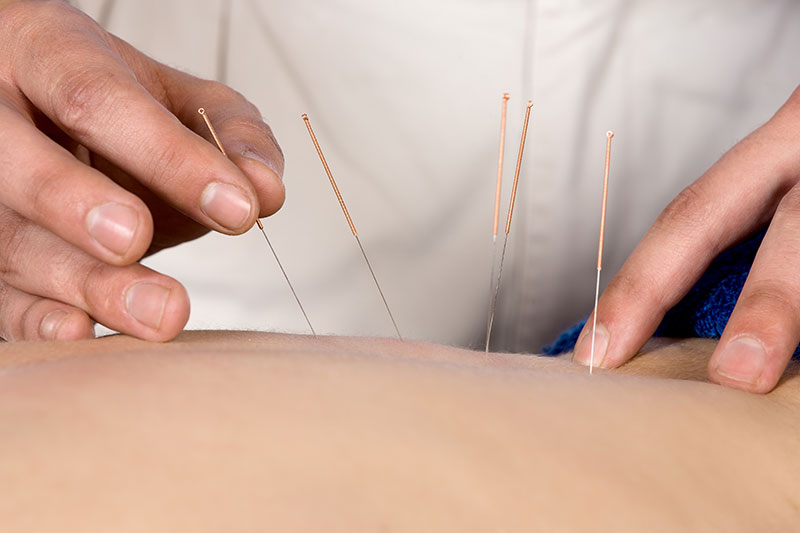
Acupuncture is a licensed medical therapy that involves the insertion of very fine, sterile needles into specific points on the body to promote healing and restore physiological balance. It originates from Traditional Chinese Medicine (TCM) where acupuncture points are mapped along meridians (functional pathways through which Qi– or cellular energy metabolism– circulates). Modern biomedical research has found strong correlations between these classical points and measurable anatomical structures.
After an injury, the body deploys a coordinated healing response involving blood flow, immune signaling, stem cells, and growth factors. However, in chronic injury, repetitive strain, neuropathy, or degenerative conditions, this healing response can become diminished or dysregulated. Acupuncture synthesizes interconnected physiologic mechanisms to regulate and restore those signals.Through these combined mechanisms, acupuncture may help:
- Reactivate stalled healing processes
- Improve resource delivery to injured tissues
- Support nerve recovery
- Reduce chronic inflammation
- Accelerate rehabilitation timelines
This is why acupuncture is commonly integrated into care for:
- Chronic musculoskeletal pain
- Sports injuries
- Neuropathy
- Post-surgical recovery
- Tendon and ligament injuries
- Organ dysregulations (Allergies, GERD, GI issues, Reproductive illnesses, Autoimmune diseases)
Rather than simply masking symptoms, acupuncture helps restore the body’s intrinsic repair capacity.
How Does Acupuncture Work?
* Needle stimulation creates measurable connective tissue movement
* Collagen within fascia exhibits piezoelectric properties, meaning mechanical stimulation can generate electrical signals
* These signals may influence cellular communication, inflammation, and tissue repair
What to Expect
During your visit, Xinlin Zhang, D.A.O.M., will start with a conversation about your health history, current concerns, and goals. Based on this intake, he’ll create a treatment plan and gently place very fine, sterile needles at specific points on your body while you rest on a treatment table. Most people feel little to no discomfort and often become deeply relaxed—some even fall asleep. After 20–40 minutes of quiet rest, the needles are removed, and Xinlin may offer simple recommendations or herbal support to continue your care at home.
Treatment may include:
- Acupuncture
- Infrared Heat Therapy
- Cupping
- Gua sha
- Moxibustion
- Electroacupuncture (when appropriate)
Will it be painful?
Acupuncture uses sterile, single-use, surgical-grade stainless steel needles. They are extremely thin—about the width of a human hair and far smaller than hypodermic needles.
Why most patients feel little to no pain:
- Needles are solid, not hollow.
- Inserted gently and precisely.
- Guide tubes minimize sensation.
- Many points are located in low-pain receptor areas.
Patients may feel mild sensations such as tingling, warmth, heaviness, or a dull ache. Most find treatments deeply relaxing.
How Many Treatments Does It Take — And Does Self-Care Matter?
Acute issues – 3–6 visits
Subacute conditions – 6–12 visits
Chronic conditions – 8–20+ visits
Preventive/Wellness care – Monthly or seasonal
From a modern physiological standpoint, acupuncture has been shown to influence multiple systems involved in long-term health. It can modulate inflammatory pathways, improve blood flow at both local and systemic levels, and regulate how the brain and nervous system process stress and pain signals. Over time, this leads to improved resilience. Patients often report better sleep, more stable energy, reduced muscle tension, and fewer flare-ups of previously chronic conditions. These are not just symptom changes, they are indicators that the system is functioning more efficiently.
Preventive acupuncture also changes how conditions progress. Instead of waiting until a flare-up becomes severe enough to require intensive treatment, regular care allows smaller imbalances to be corrected early. This reduces the frequency, intensity, and duration of future episodes. In the context of chronic pain, this is particularly important, because once the nervous system becomes sensitized, conditions become harder to reverse. By maintaining proper regulation, acupuncture helps prevent that escalation.
In practical terms, this is why many patients who initially come in for pain relief choose to continue with maintenance care. The focus shifts from reacting to symptoms to maintaining stability. Rather than asking, “How do I get rid of this pain?” the question becomes, “How do I keep my body from returning to that state?” Acupuncture provides a way to support that process, not by forcing change, but by helping the body maintain the conditions necessary for long-term balance and recovery.
- Herbal medicine
- Nutrition guidance
- Stretching or rehabilitation exercises such as Qi Gong and or Taichi
- Stress-reduction practices – Self Administered Acupressure
- Sleep optimization – Herbal and or Supplement recommendations
Is Acupuncture Right for Me?
- Neurological & Endocrine Support
- Trauma & Addiction Recovery
- Family & Reproductive Health
- Pain & Injury Recovery
- Oncology Support
- Internal Medicine